Arabic
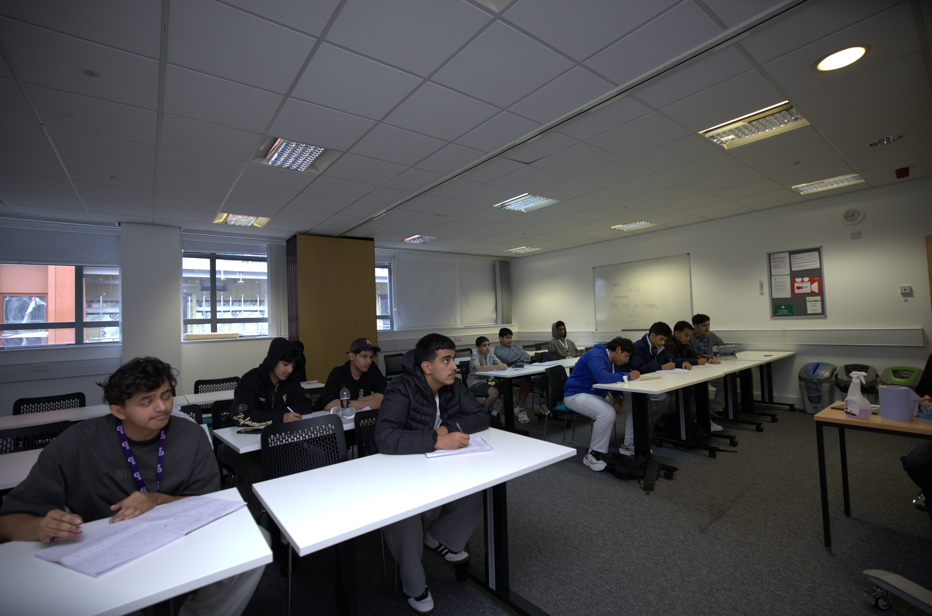
Choosing between Australia and New Zealand for study is a common question for Saudi and Arab students who want an English-speaking destination with internationally oriented universities, multicultural campuses, strong student services, and opportunities to gain academic and personal experience abroad.
At first glance, the two countries may appear similar. Both use English widely in higher education, both attract international students, and both offer programs across business, engineering, computer science, health, science, agriculture, design, and other fields.
However, the actual student experience can be quite different.
Australia generally offers larger cities, a wider range of universities and programs, bigger professional environments, and more variation between regions. New Zealand can offer smaller cities, a calmer pace of life, strong outdoor culture, and a more compact higher education environment.
The better choice depends on the student.
A student interested in a highly specialized degree in a major urban center may prefer Australia. Another student may perform better in a smaller, quieter city in New Zealand.
The right comparison should therefore focus on academic fit, cost, city size, lifestyle, distance, climate, accommodation, teaching style, internships, career planning, and personal readiness.
Start With the Degree, Not the Country
Before asking whether Australia or New Zealand is better, decide what you want to study.
This is more important than the destination itself.
A student interested in engineering should compare the exact engineering departments, laboratories, mathematics content, project work, and industry exposure.
A business student should look at finance, marketing, management, entrepreneurship, analytics, or supply chain pathways.
A computer science student should compare programming, algorithms, AI, data, software engineering, systems, and cybersecurity.
A health-related student must also consider recognition and professional requirements.
Once the academic field is clear, the comparison becomes much more useful.
Universities in Australia
Australia has a relatively large higher education sector with universities spread across major cities and regional areas.
Students may consider institutions in Sydney, Melbourne, Brisbane, Adelaide, Perth, Canberra, and other locations.
The size of the system means students can often find a wide range of degrees and specializations.
This can be useful for students who have a very specific academic goal.
For example, one university may offer a strong data science pathway, another may be more suitable for engineering, while another may provide a specialized business or health-related program.
Students should compare departments rather than only university names.
Universities in New Zealand
New Zealand has a smaller higher education system.
Students may study in Auckland, Wellington, Christchurch, Dunedin, Hamilton, and other locations.
The smaller scale can be attractive to students who prefer a more compact academic environment.
Some universities may provide strong programs in engineering, science, agriculture, business, environmental studies, technology, and other fields.
The smaller number of institutions does not mean fewer suitable options for every student, but it can mean that certain highly specialized subjects require more careful searching.
Range of Programs
Australia generally offers a broader total range of degree programs because of its larger university system and population.
Students looking for a very specific specialization may therefore find more choices.
New Zealand still offers a strong selection of undergraduate and postgraduate programs, but niche specializations may be less widely available.
This is one of the first areas students should compare.
If both countries offer a strong version of the degree you want, then lifestyle, cost, city, and practical opportunities become more important.
Studying in English
Both Australia and New Zealand are attractive because English is widely used in university education and daily life.
This reduces the need to learn another language before beginning a degree.
Saudi and Arab students can use English in lectures, assignments, group projects, presentations, shopping, transportation, and everyday communication.
However, studying in English requires more than basic conversation.
Students need academic English.
They may have to read research papers, write reports, participate in seminars, present projects, and understand technical terminology.
Academic English Readiness
A student who meets the formal English requirement may still struggle academically.
Before travelling, students should strengthen writing, reading, listening, note-taking, presentation, and research skills.
This is especially important in business, engineering, health, science, and postgraduate study.
Students who need additional language preparation should investigate English or academic preparation programs offered by institutions or language centers.
Progression conditions should always be checked directly.
Foundation and Pathway Programs
Some students may need a foundation or pathway before entering a degree.
These programs can help with English, mathematics, science, academic writing, or study skills.
They may be useful for students whose school background does not match direct entry requirements.
However, students should ask important questions.
Does the program lead to the intended degree?
What grade is required?
Is progression guaranteed or conditional?
Does the pathway affect recognition?
The full academic route should be clear before enrollment.
Teaching Style in Australia
Australian universities can use lectures, tutorials, laboratories, seminars, group projects, presentations, case studies, and independent research.
Students are often expected to manage a significant amount of study outside class.
Assessment may include reports, exams, projects, presentations, participation, and practical work.
Students who are used to highly structured school systems may need time to adapt to greater independence.
Teaching Style in New Zealand
New Zealand universities can use similar approaches, including lectures, tutorials, laboratories, project work, research, presentations, and independent study.
The difference may be more about campus size and overall environment than the academic model itself.
A smaller academic community may feel more personal to some students.
Others may prefer the larger scale and wider range of activities available in Australian cities.
Business and Management
Australia offers many business-related programs across large universities and private institutions.
Students may find management, finance, marketing, accounting, economics, entrepreneurship, international business, analytics, and supply chain programs.
New Zealand also offers business and management degrees, often within smaller academic environments.
For business students, the key question should be specialization.
A finance student should compare quantitative content.
A marketing student should look for digital marketing and analytics.
An entrepreneurship student should examine incubators and startup opportunities.
Engineering
Engineering is available in both countries.
Students should compare mechanical, electrical, civil, software, environmental, biomedical, chemical, and other branches individually.
Laboratories, project work, accreditation considerations, internships, and industry connections are especially important.
Australia's larger industrial and urban environment may provide a broader range of professional contexts in some fields.
New Zealand may appeal to students interested in areas such as infrastructure, environmental systems, agriculture-related technology, or smaller project environments, depending on the program.
Computer Science and Technology
Technology students should examine the curriculum rather than the country label.
Look for programming, algorithms, databases, cloud computing, cybersecurity, software engineering, machine learning, AI, data science, and systems.
Australia's larger cities may provide access to bigger technology ecosystems.
New Zealand can still offer strong technical study, but students should investigate internships, research groups, and employer links carefully.
The program matters more than the national stereotype.
Agriculture and Environmental Study
New Zealand can be particularly interesting to students who want agriculture, environmental science, sustainability, food systems, or related subjects.
Its natural environment and economic context may provide relevant practical exposure.
Australia also offers major programs in agriculture, environmental science, climate, water, and natural resources.
Students should compare fieldwork, research, and specialization rather than assuming one country is automatically better.
Health and Medical Fields
Students considering medicine, nursing, pharmacy, allied health, or other regulated professions should be especially careful.
The language of study may be English, but professional recognition, clinical placements, licensing, and future practice requirements matter greatly.
Saudi students should verify whether the degree fits current Saudi requirements before enrolling.
They should also understand that professional registration abroad can involve separate processes.
Research and Postgraduate Study
Both countries offer postgraduate and research opportunities.
Students considering master's or doctoral study should look at faculty expertise, research groups, laboratories, thesis options, funding possibilities, and supervisor fit.
Australia's larger research system may provide more total options across a wider range of disciplines.
New Zealand may offer a more focused research environment in some areas.
For postgraduate students, the specific supervisor and research group can matter more than the country.
Student Life in Australia
Australia offers very different student experiences depending on the city.
Sydney and Melbourne provide large, international urban environments.
Brisbane, Adelaide, Perth, Canberra, and other cities have different climates, costs, and lifestyles.
Students who enjoy large cities, extensive entertainment, professional events, and diverse communities may prefer Australia.
The trade-off is that large cities can also mean higher housing costs and longer commuting times.
Student Life in New Zealand
New Zealand may suit students who prefer a slower pace, outdoor activities, smaller cities, and a more compact social environment.
Auckland is the largest urban center, while Wellington, Christchurch, Dunedin, and other cities provide different student experiences.
Students who become overwhelmed by very large metropolitan areas may feel more comfortable in New Zealand.
However, students seeking constant large-scale professional events or major-city variety may find Australia more suitable.
Accommodation in Australia
Students may choose university residences, private student housing, shared apartments, private rooms, homestays, or studios.
Availability and price vary significantly by city.
Housing in central areas of major cities can require a substantial budget.
Students should compare rent with transportation and campus location.
A cheaper room far from university may not actually offer better value.
Accommodation in New Zealand
New Zealand provides similar options, including university halls, private student accommodation, shared flats, and rooms.
Smaller cities may offer a different housing experience from the largest Australian cities, but students should still investigate availability early.
Accommodation should never be left until the last stage of planning.
Students should also consider whether meals, internet, utilities, or furniture are included.
Cost of Studying in Australia Versus New Zealand
It is difficult to say that one country is always cheaper.
Tuition varies by institution, program, and degree level.
Living costs also depend heavily on city and lifestyle.
A student living in central Sydney may have a very different budget from someone in a smaller Australian city.
Likewise, Auckland may create a different cost profile from another New Zealand city.
Students should compare exact university and city combinations.
Total Cost Matters More Than Tuition
The true cost includes:
Tuition, accommodation, food, transport, insurance, books, technology, flights, personal expenses, visa-related costs, and emergency savings.
A lower tuition fee can be offset by expensive rent.
A more expensive degree in a cheaper city may cost less overall.
Saudi families should calculate the entire year and then the full program duration.
Flights and Distance From Saudi Arabia
Both Australia and New Zealand are far from Saudi Arabia.
Travel can involve long flights and significant time-zone differences.
New Zealand is generally even farther, which may matter for students who plan to return home frequently.
Flights should be included in the annual budget.
Students should also consider how comfortable they are living a long distance from family.
Climate in Australia
Australia's climate varies significantly by region.
Students should not think of the country as having one weather pattern.
Sydney, Melbourne, Brisbane, Perth, Adelaide, and other locations can feel very different.
Students should investigate the city where they will actually live.
Climate can affect clothing, lifestyle, transportation, and personal comfort.
Climate in New Zealand
New Zealand's climate also varies by region, but many students associate it with generally cooler conditions and strong outdoor culture.
Students should research the specific city and season.
Those who prefer mild weather and outdoor activities may appreciate New Zealand's lifestyle.
Students coming from Saudi Arabia should still prepare for cooler conditions and changing weather.
Transportation
Transportation can differ substantially by city.
Some students may rely heavily on public transportation.
Others may live close enough to walk or cycle.
In Australia, large urban areas can involve longer travel distances.
New Zealand's smaller cities may provide shorter commutes in some cases.
Students should check campus location before choosing accommodation.
Halal Food and Muslim Communities
Saudi and Arab students often consider access to halal food, mosques, and Muslim communities.
Major Australian cities generally offer broad international communities and a variety of halal restaurants and grocery options.
New Zealand cities also include Muslim communities and halal options, though availability may differ by location.
Students should research neighborhoods rather than judging an entire country.
Cultural Adaptation
Both countries are multicultural and attract international students.
Saudi students may find the academic environment relatively open and discussion-based.
Students may be expected to participate in seminars, ask questions, challenge ideas respectfully, and work with classmates from many cultural backgrounds.
This can be different from more traditional classroom experiences.
Students should be ready to communicate actively.
Group Projects
Group work is common in many programs.
Students may collaborate with international classmates on business cases, engineering projects, presentations, research, or practical assignments.
This develops teamwork, leadership, communication, and time management.
Students who actively participate can build useful professional skills.
Presentations
Presentations may be an important part of assessment, especially in business, engineering, design, and social sciences.
Saudi students should not assume that good written work is enough.
Students should practise public speaking, presentation structure, and answering questions.
Strong communication can improve both academic and professional performance.
Internships and Practical Learning
Internships can be valuable in both countries.
The availability and structure depend on the degree, university, industry, location, and current legal conditions.
Some programs may include work-integrated learning, practical projects, placements, or employer partnerships.
Students should ask whether internships are compulsory, optional, or competitive.
They should not assume that every degree automatically includes an internship.
Industry Exposure in Australia
Australia's larger economy and major cities can provide a broader range of companies and professional sectors in some fields.
Students may benefit from career fairs, employer events, startup communities, industry projects, and professional networking.
However, access to these opportunities depends on the university, location, language skills, academic performance, and student initiative.
Industry Exposure in New Zealand
New Zealand can offer meaningful industry interaction, particularly in sectors relevant to its economy and local business environment.
Smaller professional communities may sometimes make networking feel more accessible.
However, the total number of opportunities in a niche field may be lower than in a larger economy.
Students should compare their exact specialization.
Working While Studying
International students may have opportunities to work depending on current visa conditions and legal rules.
These conditions can change.
Students should verify official information directly before making plans.
They should not rely on part-time work to cover tuition or essential living costs.
Study should remain financially sustainable without uncertain income.
Scholarships and Funding
Scholarships or other funding opportunities may be available through universities, governments, or organizations.
Saudi students should also review current sponsorship and scholarship programs available through relevant Saudi authorities.
Funding conditions change.
Students should only include a scholarship in their financial plan once it has been formally confirmed.
Visa and Residence Requirements
Admission to a university does not automatically mean that a student visa will be granted.
Students may need to meet current requirements related to finances, insurance, health, documentation, or other conditions.
Australia and New Zealand have separate immigration systems.
Students should verify current requirements through official sources at the time of application.
Career Development
Students should build professional skills from the first year.
Business students can join case competitions and entrepreneurship clubs.
Technology students can build portfolios and software projects.
Engineering students can participate in practical projects.
Research students can work with laboratories.
Career development should not begin only before graduation.
Returning to Saudi Arabia
Saudi students should think about how the degree connects with sectors in the Kingdom.
Engineering can connect with infrastructure, energy, manufacturing, and smart cities.
Technology can connect with AI, data, software, cybersecurity, and digital transformation.
Business can connect with finance, consulting, marketing, logistics, and entrepreneurship.
Agriculture and environmental studies can connect with sustainability, food security, water, and environmental management.
The country matters, but the skills students bring back matter more.
Professional Recognition
Students should verify recognition before accepting an offer.
This is especially important in engineering, health, architecture, education, and other regulated professions.
Students should confirm whether the degree, university, study format, and professional pathway fit the requirements relevant to their plans in Saudi Arabia.
Recognition should never be left until graduation.
Which Country Offers a Bigger City Experience?
Australia generally offers more large-city options.
Students who want major urban environments, broad professional networks, large events, extensive entertainment, and a wider variety of university choices may prefer Australia.
Sydney and Melbourne in particular provide very large international settings.
However, this can also mean higher living costs and more complex commuting.
Which Country Offers a Calmer Lifestyle?
New Zealand may suit students who prefer smaller cities, outdoor activities, and a more relaxed pace.
Students who value nature, less congestion, and a compact student environment may feel more comfortable there.
However, students who want large corporate ecosystems or constant professional events should investigate whether the available environment matches their expectations.
Which Is Better for English Development?
Both countries provide strong English exposure.
The student's habits matter more than the destination.
Students who speak English outside class, join activities, live with international students, and avoid relying entirely on Arabic will improve more.
The accent may differ somewhat between the two countries, but both provide authentic English-speaking environments.
Which Is Better for Budget-Conscious Students?
There is no permanent winner.
Costs vary by city, university, exchange rate, accommodation, and lifestyle.
Students should compare actual offers.
A smaller Australian city may cost less than Auckland.
A New Zealand city may be more affordable than Sydney.
The comparison should always be city-to-city and program-to-program.
Which Is Better for Career Exposure?
Australia may offer more total professional opportunities because of its larger economy and larger cities.
New Zealand may offer a more focused environment and potentially closer professional communities in some sectors.
Students should avoid choosing based on general statements.
A strong internship partnership at one New Zealand university may be more valuable than a weak program in a larger Australian city.
Which Is Better for Saudi Students?
Australia may suit Saudi students who want a larger university system, more program choices, bigger cities, and broader professional environments.
New Zealand may suit students who prefer a quieter lifestyle, smaller cities, nature, and a more compact academic setting.
Neither is automatically better.
The best choice depends on academic fit, recognition, budget, lifestyle, and long-term goals.
Australia or New Zealand: How to Decide
Create a shortlist of specific universities in both countries.
Compare the exact degree.
Then compare recognition, tuition, housing, city, climate, transportation, internship opportunities, distance from Saudi Arabia, and career value.
Do not compare countries in the abstract.
A strong university in Christchurch may be a better fit for one student than a larger institution in Sydney, while another student may benefit from Melbourne's professional environment.
The answer depends on the student.

 United Kingdom